Talking Spreadsheets

I’m a software engineer. My days run on Paul Graham’s maker’s schedule: terminal, plain text files, long unbroken stretches. I don’t spend much time in Outlook or Excel. But I spend a lot of time talking to managers across the business, and over the past few weeks something has shifted. They’re in a sugar rush. The cause is Claude for Excel.
The more useful mental model has quietly shifted. This isn’t an LLM that can reference a spreadsheet. It’s a spreadsheet that can reason, update itself, search the web, and kick off actions. Intelligence added to Excel, not Excel added to an LLM.
Intelligence is moving into the apps people already use, and that matters more than anything chatbots are doing. Microsoft tried this early with Copilot and it felt premature for a long time. What changed is the quality of Q1 2026 frontier models, Opus 4.6, GPT-5.4 and their peers. The reliability crossed a threshold. We’re over three years past ChatGPT and most applications are still static, still expecting the same things of users they always did.
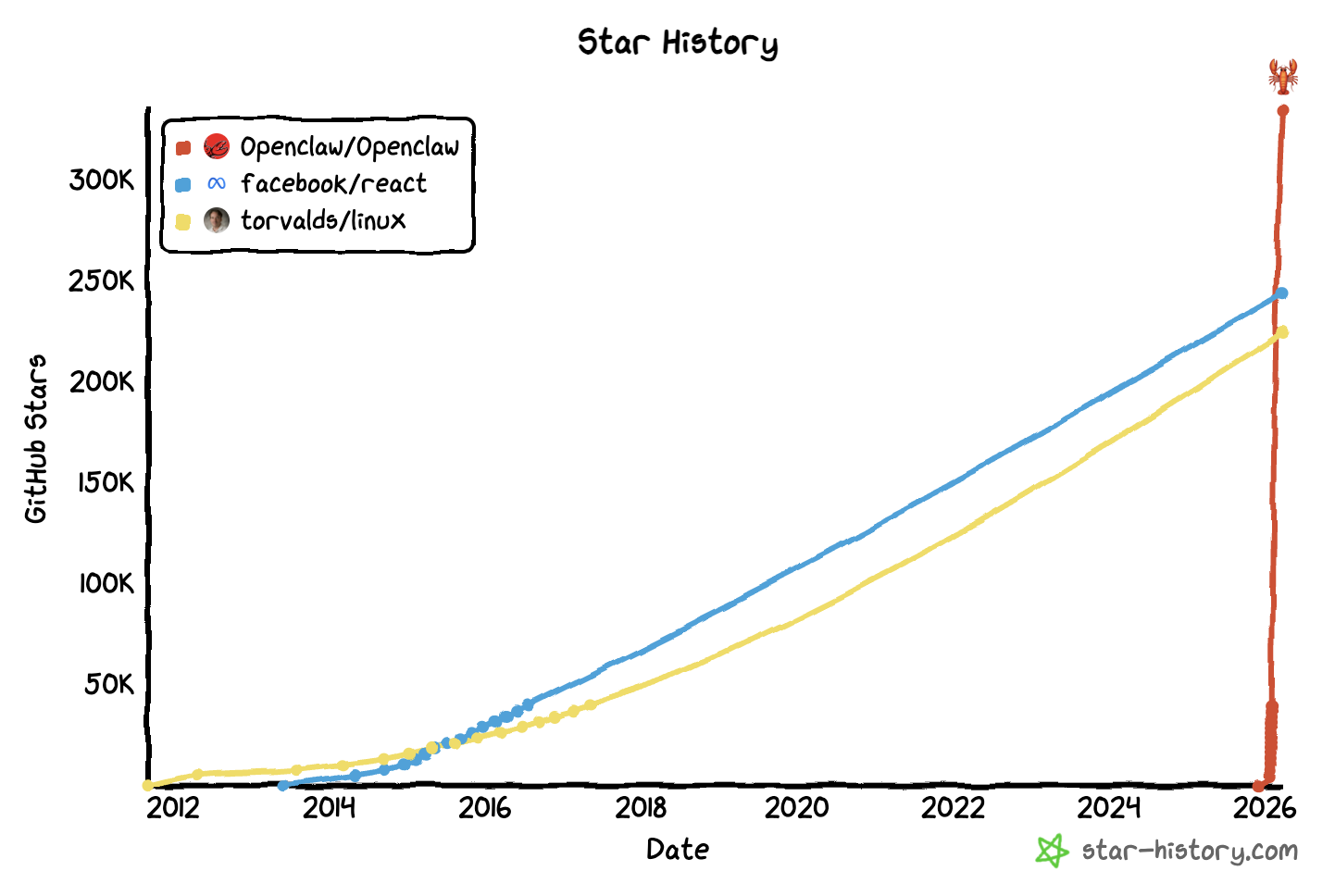
OpenClaw, an open-source personal AI agent you run on your own devices, went from zero to 250,000 GitHub stars in under four months, surpassing React, which took a decade to get there.
OpenAI hired the author and is now merging ChatGPT, Codex, and their Atlas browser into a single desktop application. Anthropic released Dispatch, a continuous conversation that runs across your phone and your Mac, with Claude able to open apps, navigate browsers, and complete workflows on your computer while you’re away from it. Both companies are converging on the same idea: one application as your point of contact for everything you’d use a computer for.
People are calling these “super apps”, borrowing the term from WeChat and its descendants. But the old super apps bundled existing services into one place: payments, shopping, messaging. The new ones are different in kind. They bundle a frontier model with a thin harness wired to your operating system. The closest precedent in computing is probably Emacs, the old joke about an operating system in search of a good text editor. Emacs was a Lisp interpreter with an editor bolted on. The editor was the thin harness, the runtime was the point. These are the same shape with wildly different capability.
My five-year-old can use a computer you talk to. She couldn’t use a computer from the 1990s without serious coaching. The chatbot was always a transitional interface, and the managers on my team figured this out before I did, because they never left Excel in the first place.