Taste in Plain Sight
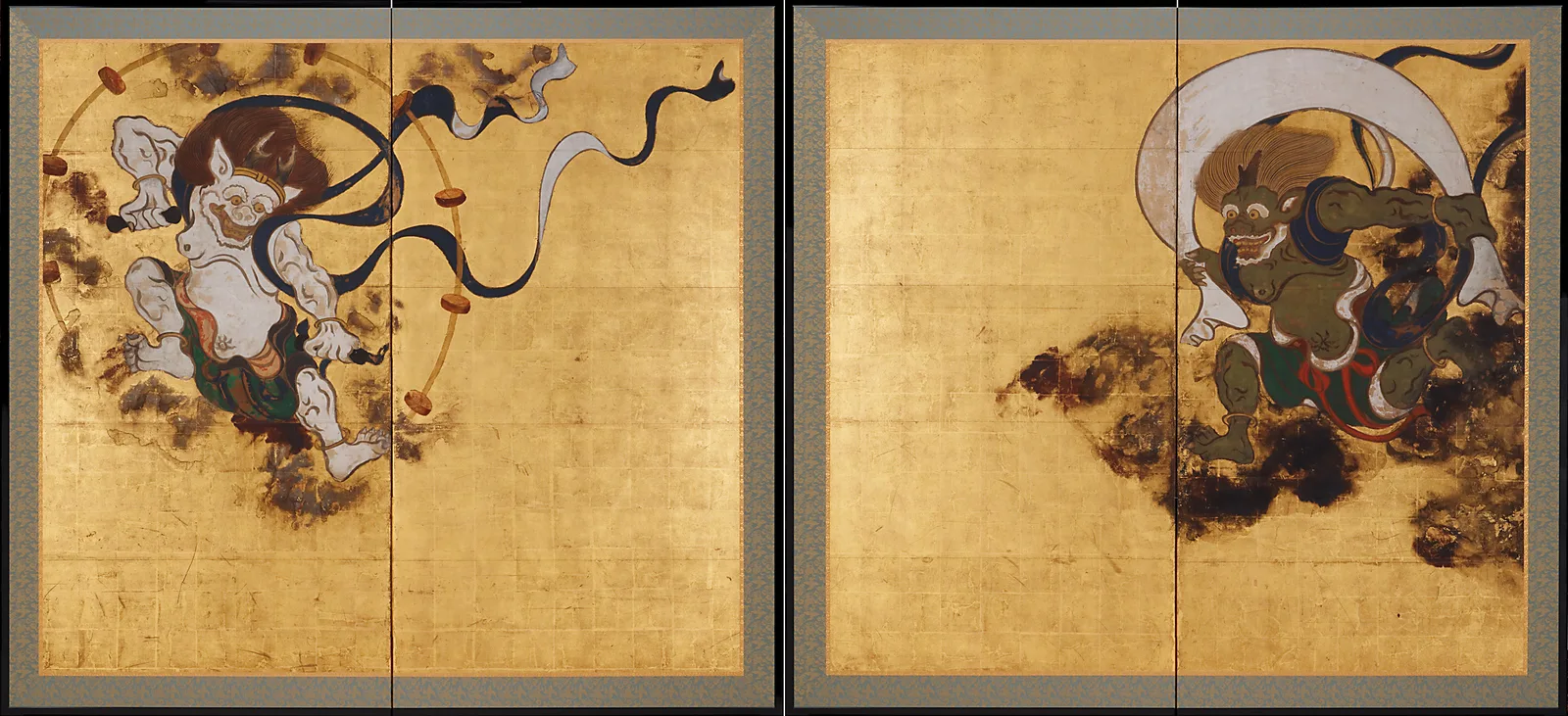 Tawaraya Sōtatsu, Wind God and Thunder God screens (early 17th century). Wikimedia Commons

For years I’ve had business ideas bottlenecked by my own hesitance. My particular disease is inaction when I’m excited about something, which James Thompson and I picked at on the Virtuous Panopticon episode of the podcast. So it’s a little strange to be writing this with a company registered, a website up and a first order placed.
The company is Liminal Fightwear, and it started as an experiment: could a ChatGPT Pro subscription pay for itself by executing an idea I’d been sitting on? The idea is that BJJ and MMA fightwear is mostly stylistically lacklustre. A lot of it leans towards skater graphics or graffiti, yet people on the mat obviously appreciate a beautiful rashguard when they see one. I have a long-sleeve one from Tatami with red koi carp across the back that gets a comment almost every time I wear it, and it’s surprisingly hard to find anything like it. So why not make them? That turns out to be quite hard, unless you have a language model, in which case most of it isn’t. Companies House, whether to incorporate for tax reasons, trademarks and the rest can all be run to the point of certainty by current frontier models.
The product is public domain and open-access art: paintings, prints, satellite and microscope imagery, anything where the permission to use it is clear. A lot of the development work was finding the right pieces and composing them for a fight context. Yes, it’s a beautiful painting, but would you feel silly wearing it on the mat? Would you get ribbed in the warm-up, or complimented? Without economies of scale, could you charge a little more than Tatami or Progress, because the look is worth the spend? Then the composition questions. Should the back differ from the front, and by how much? Coloured shoulders or solid? Branding or none? All of these need chasing, and chasing them is cheap now. The first two designs, Sōtatsu’s wind and thunder gods above and a Piranesi prison, are with the manufacturer.
That’s the background. Along the way, through a lot of experimenting, I noticed two things that seem obvious in hindsight.
The first is that the bigger frontier models now have genuinely good taste, and they are better curators than I am. AI-generated content isn’t nothing, but the argument about slop is something of a red herring, because it obscures what’s happening with curation of human work. In my teens I was a fairly insufferable music snob: Pitchfork, Drowned in Sound, knowing which albums the right people rated. There was an elitism to it that looks distasteful in retrospect, but spend enough time on anything with that energy and you learn things. I loved putting together our wedding playlist, and choosing what goes on next when the girls are dancing in the kitchen after dinner. The models are now simply better at it than me. That wasn’t true six months ago, and they overtook me quietly. Give GPT-6 Pro or Astra a sense of the space, a few songs that fit and a few that nearly do and why, and within a couple of exchanges it’s suggesting better songs from catalogues I didn’t know existed. The same went for rashguard art. The models were good at choosing artwork and composition, and they got noticeably better as I moved up to the bigger ones; Pro is clearly better than Extra High.
An underappreciated consequence might be that we see less human curation even as we consume more human-made work. And I’m genuinely unsure how people will feel about it. Say “AI” and people assume generated. Say “AI-curated” and do they mind? People using models to navigate towards answers is already a given, so I suspect it may never even be recognised socially as a thing that happened.
The second thing is that a lot of applications can now be built from duct tape and string, on top of things that already exist. Andrej Karpathy gave a talk last year about software being eaten by neural nets, drawing on his time at Tesla, where the hand-written code in Autopilot shrank as the networks took over its job. There’s a very soft version of that happening in everyday life.
In BJJ you might do five or six-minute rounds with a minute or thirty seconds of rest. Usually someone runs a timer app on their phone while music plays from Spotify or YouTube, never in sync. Wouldn’t it be nice if the end of the song arrived with the bell? Traditionally I’d have thought about building an app for that, with curated songs for each round length, maybe themed, and all the front-loaded work and upkeep that comes with it. Instead, on a drive, I gave a voice prompt describing what I wanted, talked about the kind of music I’d been thinking of, and got a Spotify playlist: a boxing bell, a song of about the right length, another bell, thirty seconds of silence, and repeat. Bells and silence tracks already exist on Spotify. The whole thing took under five minutes the first time. Then I had the model write down the pattern in a short document on Google Drive, so the next time I can ask for whatever mood I’m in, decide on a playlist before cycling across town to a session, and have it ready when I arrive.
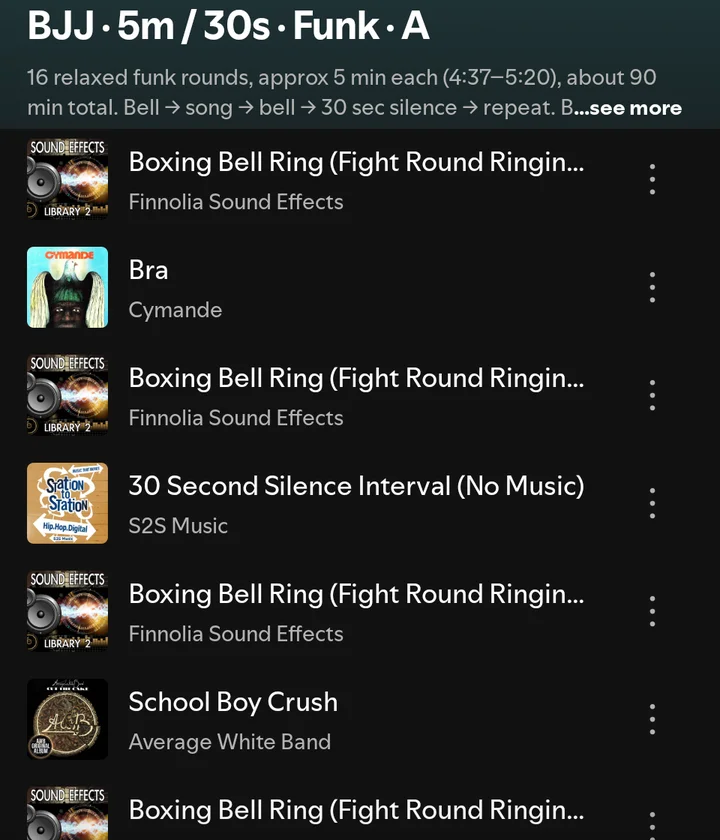
At which point, why have an application? You have a pattern and a document, and the app doesn’t actually live anywhere. I kept running into the same thing with the rashguards. My first instinct was to build a reviewing tool, effectively Tinder for rashguards. What I ended up using was voice mode while looking at images, plus the Drive and Gmail connectors, with the behaviour written down as plain text, like a skill. Work that would once have been unacceptably manual is fine if you’re happy to wait sixty seconds for it.
What strikes me is how much of this is happening where nobody’s watching. We’ve all been worried about slop while playlists, recipes and graphic design have gone the way robotics seems to be going, gradually overtaken by general language models. This week OpenAI’s general model Astra beat specialised robotics models at their own job, and in one community experiment it remotely drove a robot arm. Will Depue said that six months ago robotics is what he’d have named as safe from the one big model, and that “we got bitter lessoned out of left field”. Freda Duan, after talking to fifty people at the frontier of robotics, called it “robotics’ GPT-3 moment”. A week or two ago I had Claude roast a group chat of friends, and the surprise was that it kept pace quite happily with some fairly committed Inbetweeners-style banter. I hadn’t been tracking comedy in models at all. From late 2025 into this year people talked about taste as the final frontier, the thing that would stay human. You hear that less now, and maybe that’s because there’s a dim sense we’re not quite as safe as we thought.
The standard picture of a product is Jobs and Wozniak: someone with taste and someone who can build. For a while the human tail of ability was so far beyond the models that it wasn’t interesting to ask whether they could stand in for either. You could get a React app out of one, but something robust and interesting felt questionable. That’s no longer the case on the Wozniak side, and my own identity as a software engineer has already shifted from writing code to reviewing it, and now to questioning whether many applications need to exist at all. Taste was meant to be the safe half. I’d argue the seventieth-percentile human looks more exposed there than they did a year ago, and that this isn’t priced in. Meanwhile the scaling laws carry on, so I do wonder how long Jobs stays safe too.
In the meantime, I never expected to be recreationally starting and running a business from my dog walks, but here we are. It would be strange if the future looked normal.